

inxky.over-blog.com/
24 Janvier 2021

Answer: All hard drives, removable disks, CDs, DVDs, and other media need to be formatted in order for your computer to use them. The formatting process writes the basic directory structure onto the disk so that other directories and files can be added.
Answer: All hard drives, removable disks, CDs, DVDs, and other media need to be formatted in order for your computer to use them. The formatting process writes the basic directory structure onto the disk so that other directories and files can be added. On a Windows computer, disks are formatted using the FAT32 or the newer NTFS file system. How to Partition and Format a Drive on Windows 10 and 8.1 Partitioning a hard drive means preparing it to be used by the Operating System (OS), creating a Volume for the OS to use. Adobe audition sequencer. Formatting, however, deletes the content of a volume to clean it, and assigns a file system to it so that data can be moved into and out of the volume.
On a Windows computer, disks are formatted using the FAT32 or the newer NTFS file system. On a Mac, disks are typically formatted with the HFS or HFS+ file system. Once a disk is formatted, it can only be used by a computer that can read the disk's file system. Therefore, if you want to use a Macintosh-formatted disk with a Windows computer, you would need to reformat it using a Windows-compatible file system. Macintosh computers can read most Windows-formatted disks, but to use a hard drive on a Mac, you will need to format it using a Macintosh-compatible file system.
When you have a new hard drive, or when you're reinstalling Windows, the OS may ask you to format the drive. Large capacity external hard drive. Get windows 10 application. If given a choice, the two common modes are NTFS and FAT32. But what are those, and why. The term format actually means to prepare a storage medium (usually a hard drive or disk) for reading and writing. Before your computer can use any kind of storage device (such as a hard drive, CD-ROM, or network share), you or your operating system must make it accessible through the computer's file system. This process is called mounting. https://soften.mystrikingly.com/blog/teracopy-1-0. http://vucuhq.xtgem.com/Blog/__xtblog_entry/19356120-cinema-4d-r20-028-create-3d-videos-and-animation#xt_blog. You can only access files on mounted media. Formats and mounting.
The most important thing to know about formatting or reformatting a disk is that the formatting process erases all the information on the disk. Well, technically, it just writes a new directory structure that allows all the files to be overwritten, creating a blank disk. There are some utilities that can recover files after a disk has been formatted. But for all practical purposes, formatting a disk is the same as erasing it. This is because the disk needs to be <><>< b=' /> prior to formatting.< />< />
You can format most disks with Windows using the ' format'='' option='' in='' the='' file='' menu='' after='' selecting='' a='' disk='' to='' format.='' a='' macintosh='' computer='' will='' prompt='' you='' to='' initialize='' and='' format='' an='' unformatted='' disk='' within='' the='' finder='' or='' you='' can='' use='' the='' convenient='' 'disk='' utility'='' program='' to='' reformat='' any='' writable=''>
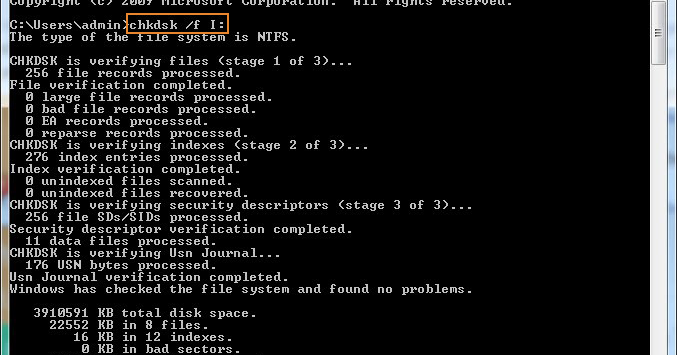
Drive Format may refer to any of the following:
1. When referring computer drives, most commonly a hard drive, drive format is a type of file system on the hard drive. Three of the most common formats, or file systems, are FAT, FAT32 and NTFS. The FAT format was used before Windows 95. Filmora lifetime plan. FAT32 was used with Windows 95, Windows 98, and Windows ME. NTFS was used with Windows 2000 and later operating systems.
2.Drive format can also be in reference to the erasing of all data on a storage drive, like a hard drive or USB flash drive. A basic format only removes the pointers to the files on the drive. The files themselves are still technically there, but no longer visible and can't be easily retrieved. To truly delete all files, you need to perform a type of format called zero filling.
File system, Hard drive, Hard drive terms, Operating System terms


/image%2F6214600%2F20210327%2Fob_d572cd_directv-for-windows-7.jpeg)
/image%2F6214600%2F20210327%2Fob_4ac0d2_2018-premier-pro.jpeg)
/image%2F6214600%2F20210327%2Fob_92ffbf_call-of-duty-4-xbox-com.jpeg)
/image%2F6214600%2F20210327%2Fob_7fc8f6_windows-scp-program.png)